LaTeX
Write papers collaboratively with a multi-file editor, live PDF preview, and contextual AI help.
TL;DR -- The LaTeX module gives your team a full document workspace inside VOLT: multi-file editing, project structure, assets, compile-to-preview flow, imports and exports, and AI assistance that understands the current document context.
Overview
LaTeX in VOLT is built for the stage of research where simulation work starts turning into figures, captions, methods sections, and drafts. Instead of exporting data from one system and writing somewhere else, you can stay in the same workspace and move directly from analysis to manuscript work.


Project structure
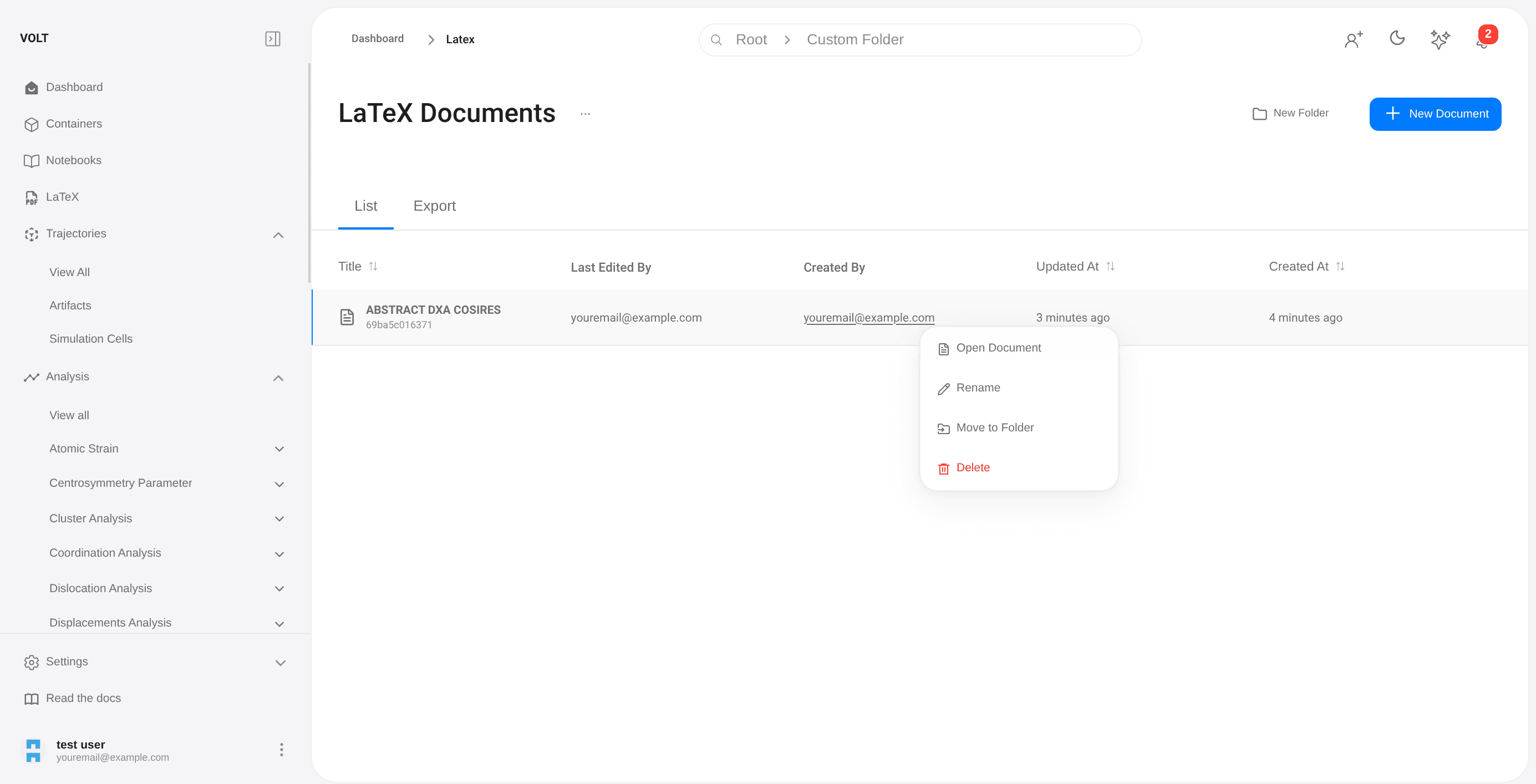
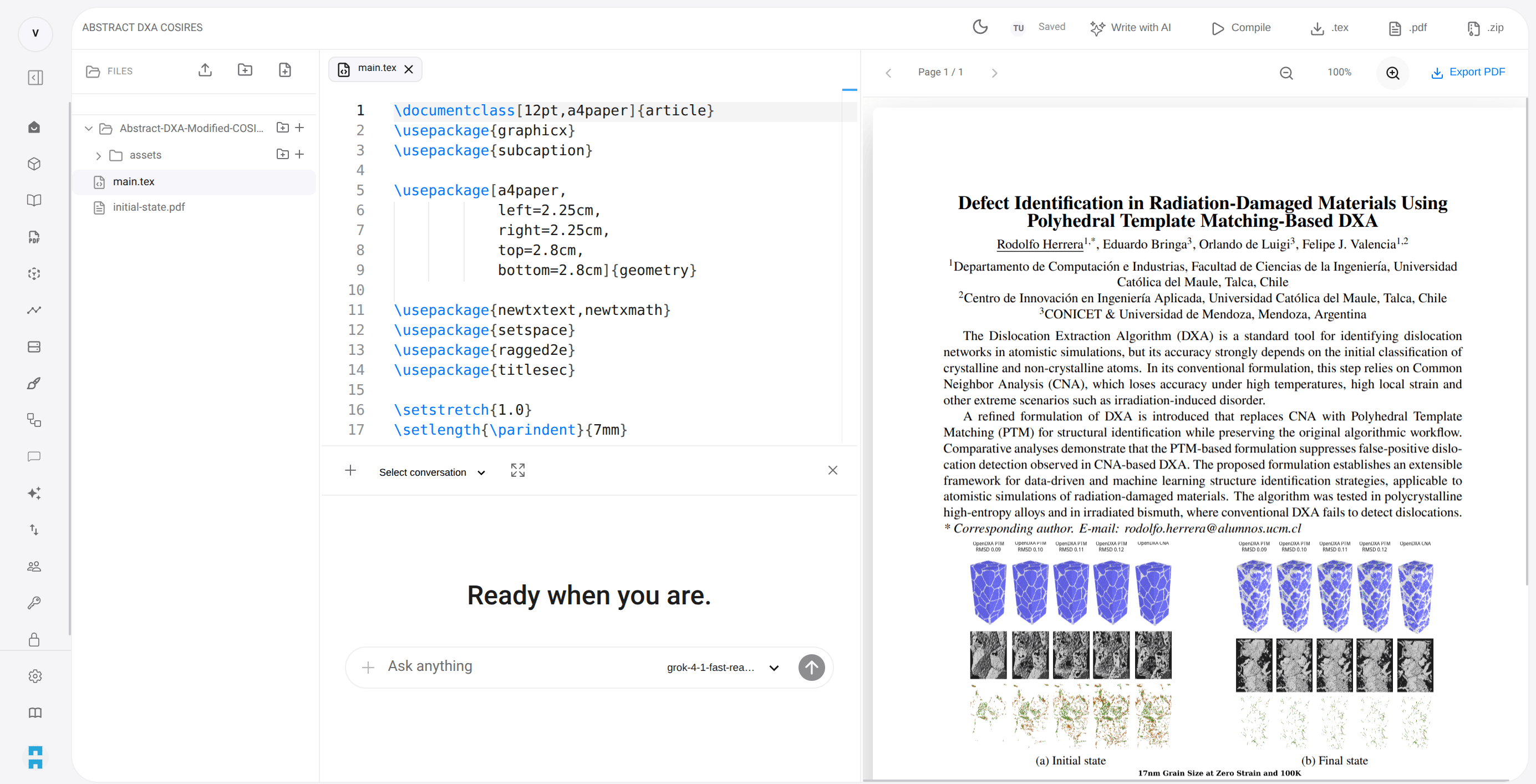
Each document is a project with its own file tree, entrypoint, assets, and compilation state.
That means you are not limited to a single monolithic .tex file. You can organize the document the same way most real papers are organized: multiple files, supporting assets, and a chosen entrypoint that defines what gets compiled.
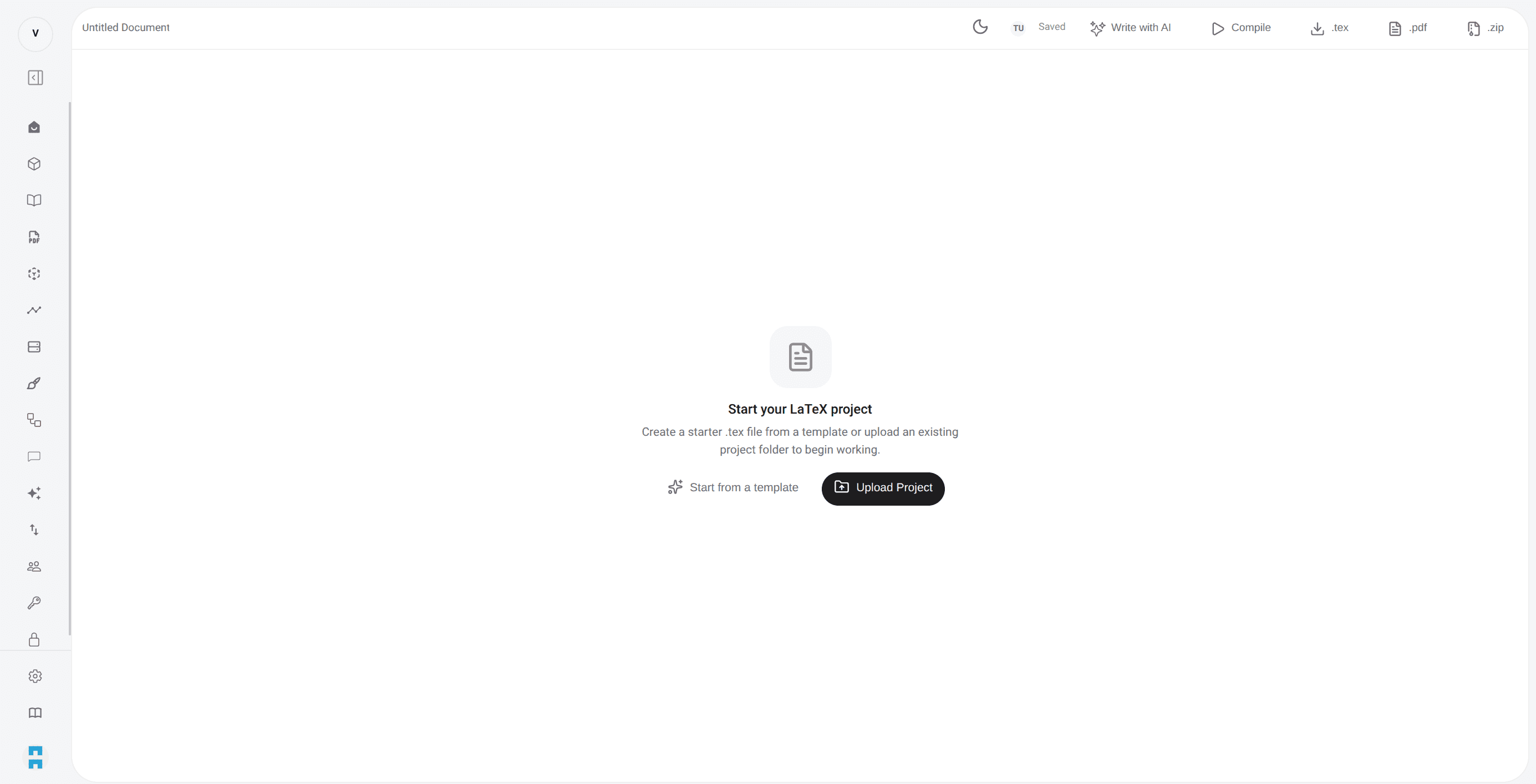
The editing workspace
The three-panel layout keeps the core loop visible at the same time: file structure on the left, code in the center, and compiled output on the right.
That is what makes the module feel less like a text editor embedded in a web page and more like an actual document workspace.


Collaboration and autosave
Multiple people can work in the same project, and VOLT continuously synchronizes changes through the real-time layer. On top of that, autosave and compile behavior keep the PDF preview reasonably close to the current state of the project without forcing you into a manual save-compile-refresh loop.
AI in document context
The LaTeX AI panel is one of the places where Volt AI feels most specific. Instead of talking to the workspace in general, it can work with the active document and file context.

That makes it useful for tasks such as rewriting a section, generating tables, fixing compile errors, or helping with figure scaffolding while still staying grounded in the current project.
Import and export
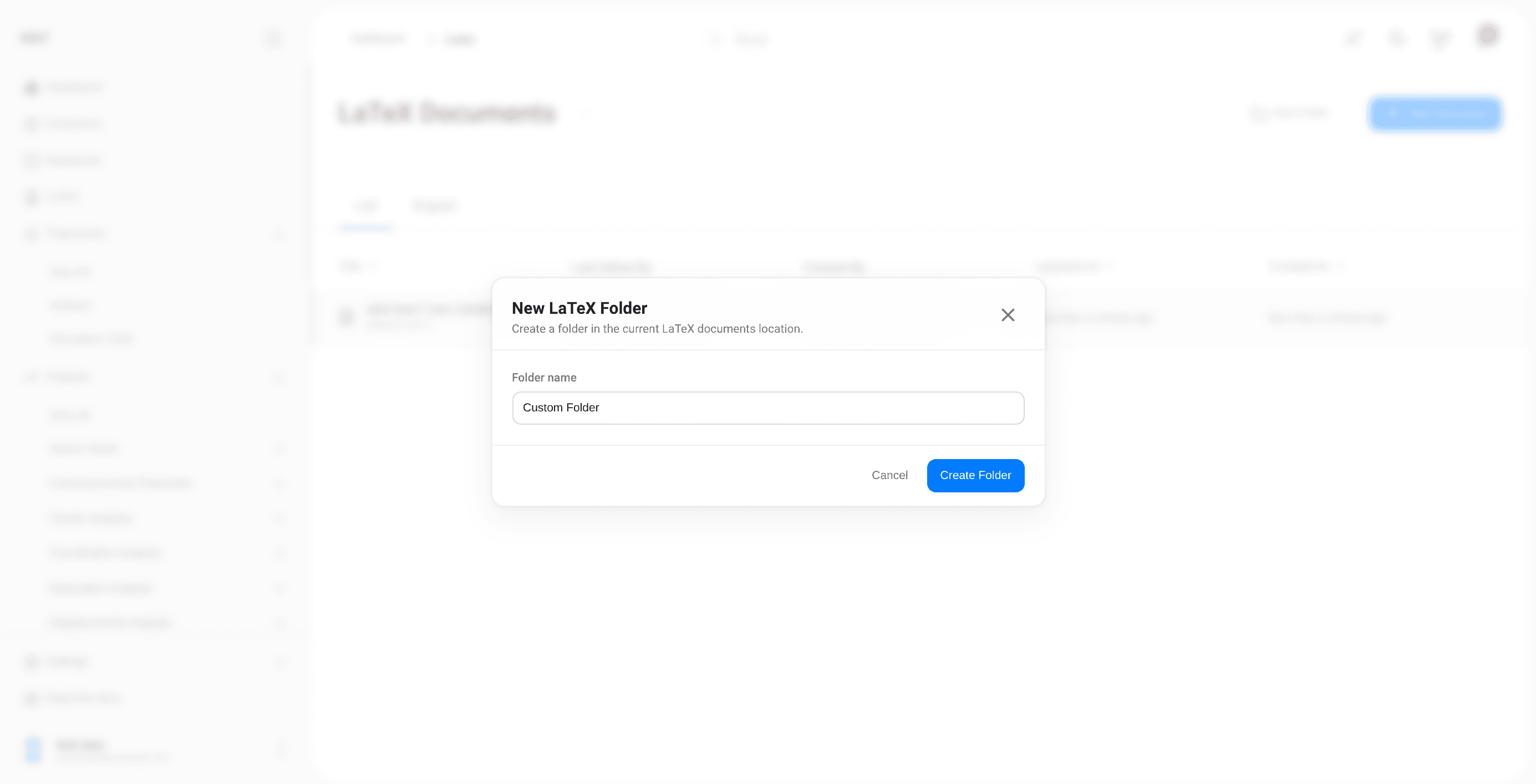
LaTeX projects can be imported from existing archives and exported again as source files or a packaged project. This keeps the module practical even if part of the document lifecycle still happens outside VOLT.
Why LaTeX belongs here
This module makes the most sense when you see VOLT as a research workspace instead of a simulation viewer. The same platform that stores trajectories and analysis outputs can also hold the manuscript work that grows out of them.
That continuity is the real benefit. Your data, discussion, notebook work, and writing process do not have to live in unrelated systems.